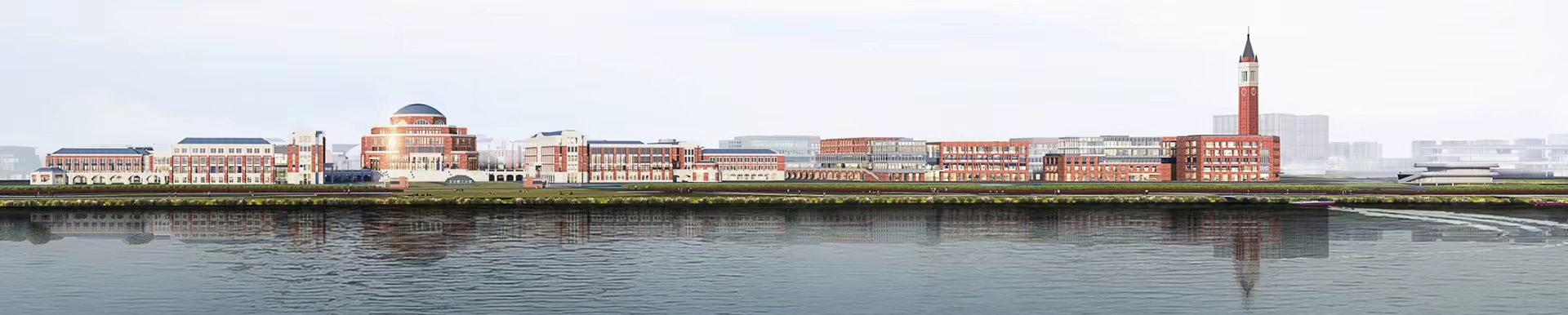
The Science and Engineering Conplexis located in the core area of the campus, serving as the concentrated functional hub for research and teaching in Phase 1-1. Its six individual buildings are linked by a continuous elevated double-layer corridor on the second floor. Stretching from the Core Cluster to the west, this corridor extends eastward toward the cafeteria and Student Activity Center, forming a pedestrian spine running through the campus. Tailored to Ningbo’s rainy and humid climate, the double-layer corridor offers an all-weather shaded and rainproof pedestrian route, a circulation system where users can pause and interact without disruption from the weather.
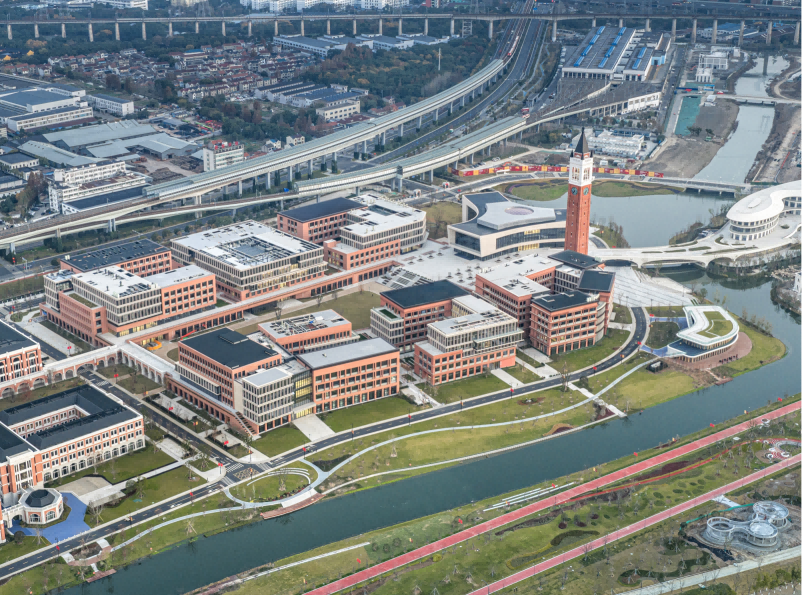
Carrying forward the campus’s modern classical design ethos, the building facades adopt a more streamlined contemporary expression, dominated by red brick and glass curtain walls. The warm, substantial red brick embodies the scholarly heritage of the university, while the light, transparent glass lends a modern flair, striking a balance between gravitas and dynamism.
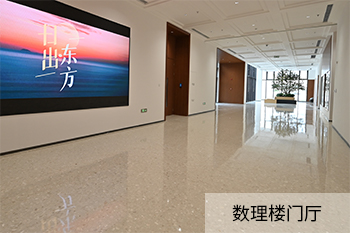
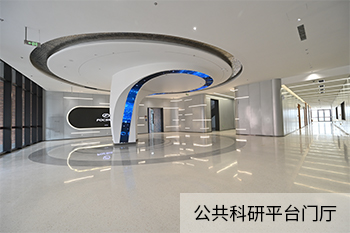
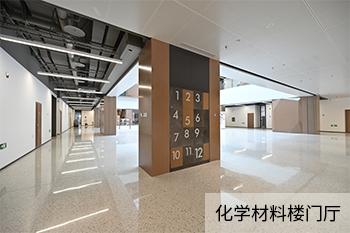
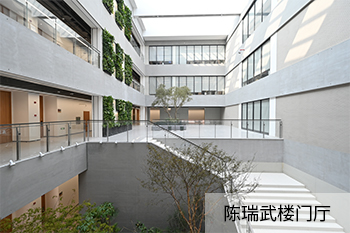
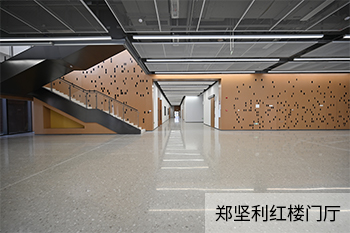
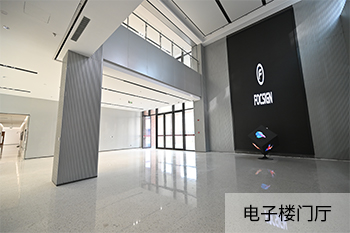
Each of the six buildings is dedicated to a distinct discipline. Within a unified planning framework, every building features a uniquely identifiable lobby. All follow the same design philosophy: integrating laboratories, research offices and open communal spaces to blur functional boundaries, enabling spontaneous academic exchange and inspiring new ideas. The buildings showcase their disciplinary characteristics respectively: the lobby of the Engineering Building features a raw, understated industrial aesthetic; the School of Life Sciences incorporates vertical greenery and indoor woodland landscapes that echo the essence of life science; the Informatics Building uses digital display screens to highlight its smart, tech-forward identity; the Mathematics & Physics Building adopts a classic collegiate style, with an apple tree installation at the far end of its side lobby as a tribute to Newton, symbolizing the spirit of fundamental scientific inquiry.
Combining rigorous research functions, pleasant pedestrian environments and discipline-specific spaces, the cluster acts not only as a base for cutting-edge experiments and research projects, but also as an open academic venue for interdisciplinary dialogue and intellectual exchange.
 EIT HOMEPAGE